
ANNUAL REPORT 2011
INTRODUCTION
MANAGEMENT AND CORPORATE GOVERNANCE PRACTICES
FINANCIAL INFORMATION AND RISK MANAGEMENT
ANNUAL REPORT (PDF)
Chairman's Message
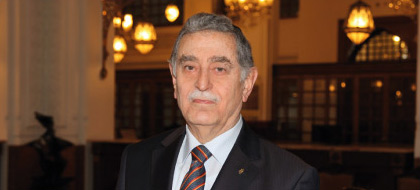
As the cornerstone of the Turkish banking industry, Ziraat Bank has continuously supported Turkey's national economic development since its foundation in 1863.
Without interruption, our Bank has allocated resources to farmers, merchants, entrepreneurs and individuals, offering its banking products and services throughout Turkey under the most viable conditions.
As it prepares to celebrate its 150th anniversary in 2013, Ziraat Bank aims to maintain and strengthen its role as the driving force of the economy and to demonstrate a sustainable and profitable growth performance.
Problems in the developed world raised the prospect of economic recession, especially in the Eurozone, while emerging economies also felt the heat of this state of affairs through channels such as foreign trade and capital flows.
Esteemed shareholders,
2011 will be remembered as the third year of the global financial crisis. The decoupling between the growth rates and inflation rates of developed and developing countries continued in 2011, while the most important development that left its mark was the public debt crisis in Europe.
In the developed world, the public sector - which was the key supporter of the real and financial sectors at the beginning of the crisis - became the leading actor of the crisis in 2011. The crisis that broke out in Greece – a relatively small economy – led to significant and worrying developments, particularly in the Eurozone in the second half of the year. During this period, EU authorities searched for a solution to the problem in Greece, while a stream of bad news from larger economies such as Italy, Spain and France clearly indicated that the public debt problem was the most burning fundamental problem of the Eurozone.
Sovereign risks, as well as mounting concerns with respect to developments in the growth path of the global economy and the strength of the banking systems of some countries, added to global financial stresses, particularly in the second half of the year, while global capital retreated from risky assets.
Share prices of banks exhibited a sharp decline and a significant deterioration was observed in total funding conditions of financial institutions. Pressure on already tight credit conditions increased, in turn, further raising concerns over global growth and sovereign risk. In such an environment, European authorities announced a string of measures aimed at tackling the mounting concerns surrounding the ability of European countries and banking industries to complete their debt repayments. Instead of purchasing bonds, the European Central Bank began to provide direct liquidity to the banks in the Eurozone towards the end of the year. In December, a total of Eur 489 billion in resources with a maturity of 3 years and interest rate of 1% was transferred to a total of 523 banks operating in the Eurozone.
Meanwhile, the international credit rating agencies, Standard & Poor’s, Moody’s and Fitch, cut the credit ratings of many countries because of the impacts of the debt crisis in the Eurozone and placed the credit outlook of some major banks, companies and developed countries on a negative watch. Mounting risks and sinking ratings set the stage for a significant expansion of the capital deficits at European banks in 2011. The IMF estimates that the total capital deficit of European banks amounts to Eur 200 billion.
Problems in the developed world raised the prospect of economic recession, especially in the Eurozone, while emerging economies also felt the heat of this state of affairs through channels such as foreign trade and capital flows.
Having returned to its sustainable growth path in 2010, the Turkish economy demonstrated a strong performance in the first three quarters of 2011, exhibiting steady growth of 12% in the 1st quarter, 8.8% in the 2nd and 8.2% in the 3rd quarter. While economic growth has been supported by domestic demand, volatility in the global economy and wobbles in global economic growth triggered by the European debt crisis led our economy to show a relative slower performance.
However, the initial indicators show that economic growth continues, but at a slower pace. Industrial production grew by an average of 8.9% in 2011, while manufacturing industrial production grew by an average of 9.2%. Moreover, the manufacturing industry’s capacity utilization rate was realized 75.5% in December 2011. In light of these figures, the Turkish economy is expected to grow by about 8% in 2011. In 2012, however, Turkey’s economic growth is predicted to slow down in response to the measures taken to cool down domestic demand and, in particular, the developments in Europe.
The current account deficit remained the most fundamental risk facing the Turkish economy in 2011. The two primary causes of the current account deficit, that has reached a 12-month rolling figure of US$ 77.1 billion, can be listed as imports of intermediate goods and external dependency in the area of energy. The quality of financing for the current account could prove vital in dealing with the problems facing European economies, which are Turkey’s largest export markets, as a slackening in exports to Europe would raise Turkey’s current account.
Another development in 2011 which will have far reaching impacts on the banking industry was the measures taken by the CBT and BRSA to cool down economic growth. In an effort to cool down the economy, the CBT raised the required reserve ratio and the BRSA introduced new regulations with respect to provisions and capital adequacy. However, the CBT later cut the required reserve ratio because of the change in the international conjuncture.
We predict that the Turkish banking sector will emerge from global crisis relatively unscathed in 2012 when compared to Europe, thanks to its robust capital structure and asset quality. According to the projections, about 400 new branches will be opened and at least 7,000 more people will be employed in the Turkish banking sector in 2012, with the sector on course to expand its total assets by 15-18% by the end of the year. On the other hand, credit volume is set to continue growing in a balanced manner.
In 2011, we reflected the unique potential offered by our economies of scale and the massive volume of tangible assets under our control to our performance.
As one of the most important cornerstone of the sector, our Bank continued to grow and strategically moved towards an efficient and productive balance sheet and investment portfolio in 2011.
In 2011, we reflected the unique potential offered by our economies of scale and the massive volume of tangible assets under our control to our performance. We also have continued both households and the Turkish business world in an approach that is independent of market conditions.
The results we achieved in different business lines throughout the year are provided in detail in this report for your consideration as our stakeholders.
In this section of my message, I would like to discuss a key strategic decision we took during 2011. Based on the principles of sustainable profitability and efficiency, our Bank’s Board of Directors decided to apply a customer-oriented business model aimed at improving our working habits with our customers and to respond to our customers’ financial needs rapidly and in a qualified manner. To this end, we adopted the principle, “Together, to a better future”, which is the main theme of this year’s annual report; and we determined the motto of this program as ‘managing change’.
Rising from the deeply rooted and robust foundations of a history dating back nearly 150 years, Ziraat Bank is ready to adopt change in the most accurate and rapid manner and to produce growing added value for all of its stakeholders, thanks to its healthy financial structure, unique knowledge and market experience, its corporate capabilities, its millions of customers nationwide, its unrivalled service network and its precious human resources.
Ziraat Bank is ready to adopt change in the most accurate and rapid manner and to produce growing added value for all of its stakeholders.
Within the framework of our project of change, we aim to provide the banking services required by our customers at the right time, through the right channel and with the right value proposition. To realize this, we determined as our primary targets as reinforcing the concept of the ‘Ziraat Customer’ and raising customer loyalty.
As long as we fully execute our strategies of change, Ziraat Bank will grow stronger with new achievements and maintain a place in customers’ hearts, while remaining the unwavering option of its employees.
At this point we will all play key roles - the Board of Directors, that guides us in the Bank’s strategic visions, the executive committee, that goes to such great lengths manage our Bank properly at all times with their corporate and professional competencies, and our Bank’s employees, who all strive with self-sacrifice to realize our targets.
Esteemed shareholders,
I would like to take this opportunity to extend our gratitude to you all - our business partners and those who have complete trust in our brand and provide substantial or spiritual contributions to the value we produce through various channels.
With your trust, preference and support, Ziraat Bank advances on its path by saying, Together, to a better future.
Yours sincerely,
Muharrem Karslı
Chairman of the Board of Directors